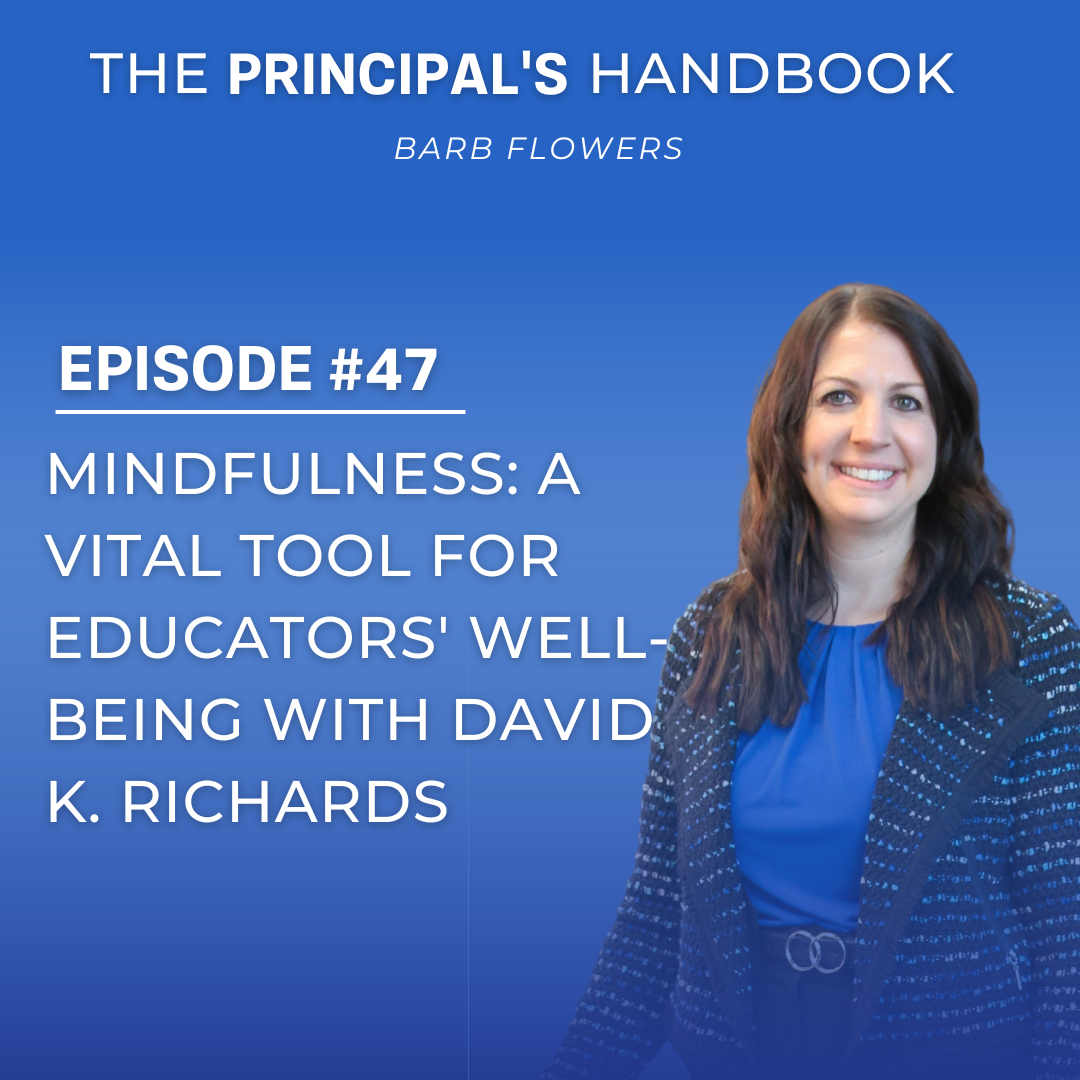
Welcome to The Principal’s Handbook, your go-to resource for principals looking to revamp their leadership approach and prioritize self-care. I’m Barb Flowers, a certified life coach with eight years of experience as an elementary principal. Tune in each week as we delve into strategies for boosting mental resilience, managing time effectively, and nurturing overall wellness. From tackling daily challenges to maintaining a healthy work-life balance, I’m here to help you navigate the complexities of school leadership. Let’s focus on your well-being and reignite your passion for the job.
Welcome, David!
I’m excited to have you here today. Please tell us a little about your journey in education.
David:
Thanks, Barb. My journey really began after I experienced burnout at age 30. I was working in corporate banking two blocks from the White House, and on the outside, everything looked perfect. But I was deeply unhappy. Then I came across a book by Martha Beck, “Finding Your Own North Star.” I read it cover to cover and had an epiphany. That book inspired me to leave banking and pursue a career in education, even though it was a huge shift—going from a luxurious salary and three-piece suits to becoming a teacher.
Barb:
That’s a huge transition! I love hearing stories about people making unconventional career moves. What was it about Martha Beck’s coaching that inspired such a big change for you?
David:
Great question! I worked with a Martha Beck-trained life coach for over ten years, and it’s been transformative. Her book helped me realize that I wasn’t living the life I truly wanted. Coaching made me dive deep into myself to understand what really mattered. It gave me the courage to leave banking and pursue teaching, even though it was unconventional.
Barb:
That’s powerful. And so, you transitioned into teaching. What happened next?
David:
I went from corporate banking to teaching in Oakland public schools. The contrast was extreme, but I loved the kids. However, interacting with adults in that environment was challenging. I eventually moved to a charter school organization, where I helped grow the schools from one to ten over nearly a decade. However, the pace and growth caused me to burn out again. By age 40, I had two young children, and I fell ill with Bell’s palsy, which was a wake-up call.
Barb:
It sounds like you were driven by the work, but it came at a cost. What did you learn from that experience?
David:
You know, you push yourself so hard for external success, but eventually, it catches up with you. I didn’t recognize the signs of burnout until it became extreme, like getting sick. I ignored the little clues until they became big problems. It’s so easy to keep going, thinking everything’s fine, but the reality is that without self-care, it all catches up.
Barb:
I totally agree. It’s so easy to push ourselves beyond our limits, especially when we’re doing meaningful work. So, what did you do after your health scare?
David:
After Bell’s palsy, I realized that my health had to come first. I took several months off to rest and reset. It was a wake-up call that made me rethink everything. I committed to never going back to the rat race at that pace. Now, I pace myself to protect my health.
Barb:
That’s such a crucial lesson. And I know you’re passionate about mindfulness and meditation now. How did you incorporate those into your routine?
David:
I started meditating every day after taking a course with Dr. Shefali, a child psychologist. She emphasized the importance of daily meditation. At first, I struggled with finding time, but I started with just 5-10 minutes a day. Eventually, it became a habit, just like brushing my teeth. I even meditated in a janitor’s closet at school! It became part of my routine, and it made a huge difference in how I approached my day.
Barb:
I love that you made it a priority, even in a busy school environment. How would you recommend teachers incorporate mindfulness into their day?
David:
I’d say start with 5-10 minutes, just like brushing your teeth. No need for a fancy setup—just find a quiet space, even a janitor’s closet if needed! You can use apps like Calm or Insight Timer, or simply find a YouTube guided meditation. The key is consistency, even if it’s just for a few minutes. Over time, it becomes part of your daily routine and helps you stay calm and focused throughout the day.
Barb:
That’s such great advice. And I love how you also mentioned how mindfulness helps with mindful listening and being present in your work. It’s so important to be present for the people you’re serving.
David:
Exactly. Once you start practicing mindfulness, it shifts your perspective. You’re more present and grounded, especially when handling challenging situations. It helps you respond thoughtfully instead of reacting impulsively.
Barb:
Absolutely. It’s all about finding that balance and being mindful of our thoughts and actions. How can people reach out to you if they want to learn more about your work?
David:
You can find me at davidkrichards.com. I offer one-on-one coaching for leaders and teachers, and I’m also helping people open micro-schools. I’ve been working with clients across the country on starting their own schools, and it ties into what we discussed—finding your true passion and aligning your work with what makes you happy.
Barb:
Thanks so much for sharing your journey and your insights with us today. It’s been great having you on the podcast!
David:
Thanks, Barb. It’s been a pleasure!
Barb:
If you’re interested in one-on-one coaching with me, I offer free consultations. You can schedule a session through the link in the show notes. Remember, you have the power to shape your life according to the mindset you choose. Have a great week, and I’ll see you next time.