Welcome to The Principal’s Handbook, your go-to resource for principals looking to revamp their leadership approach and prioritize self-care. I’m Barb Flowers, a certified life coach with eight years of experience as an elementary principal.
Each week, we explore strategies for boosting mental resilience, managing time effectively, and nurturing overall wellness. From tackling daily challenges to maintaining a healthy work-life balance, we’ll navigate the complexities of school leadership together.
Welcome to a podcast where your well-being is the top priority.
👋 Introducing Today’s Guest
Barb:
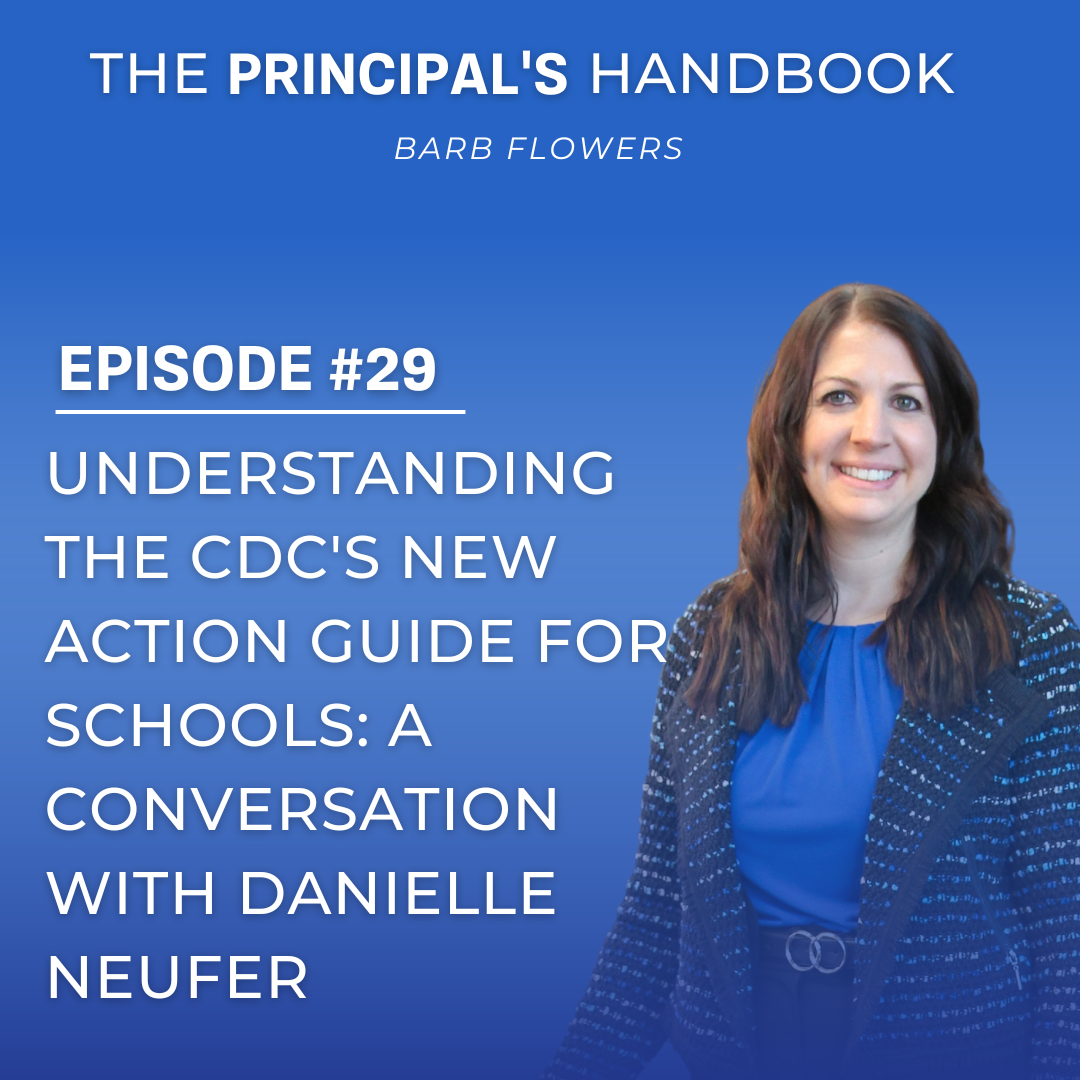
Welcome, everyone! Today, I’m here with Danielle Nuhfer. Danielle, go ahead and introduce yourself.
Danielle:
Hi, I’m Danielle, the founder of Teaching Well and author of The Path of a Mindful Teacher. I work with schools and districts to promote teacher well-being and mental health. In my experience, the greatest predictor of a school’s well-being is the well-being of its teachers.
Barb:
I love that—and I couldn’t agree more. If you haven’t read Danielle’s book, I highly recommend it. It’s packed with tools and exercises to help teachers be more mindful, and it would make a fantastic book study for any staff.
📘 Spotlight on the DASH Report
Today, we’re diving into the DASH Report—an action guide created by the CDC’s Division of Adolescent and School Health. It was released in December 2023 and is designed to help school and district leaders promote mental health and well-being in a structured, system-wide way.
Danielle:
When I first came across the DASH Report through another podcast, I was blown away. A few years ago, I don’t think we could have imagined the CDC releasing a report this in-depth about mental health in schools. I think it’s a huge step forward in education.
🔑 6 Key Strategies from the DASH Report
Let’s walk through the six strategies outlined in the DASH Report and talk about what they mean for school leaders.
1. Increase Students’ Mental Health Literacy
Barb:
We’ve talked about financial literacy and reading literacy—now we’re introducing mental health literacy to students. Helping kids understand their own mental health and emotions is such an important life skill.
Danielle:
Yes! These aren’t just lessons for high school psychology class. We should be integrating emotional awareness from an early age, so kids develop a strong foundation of self-understanding.
2. Promote Mindfulness
Barb:
This one is close to my heart. At my school, we have “Mindful Mondays” and “Thoughtful Thursdays.” My own kids talk about doing breathing exercises during the morning announcements—it’s making a difference!
Danielle:
I’ve been doing mindfulness work in schools for over a decade, and it’s amazing to see it finally get the recognition it deserves. This isn’t about religion or philosophy—it’s about giving kids and adults the tools they need to self-regulate.
3. Promote Social, Emotional, and Behavioral Learning
Barb:
We’ve talked a lot about SEL, but I love how this strategy includes the behavioral piece. Teaching kids emotional regulation leads to fewer behavior issues—it’s all connected.
Danielle:
Exactly. SEL and mindfulness go hand-in-hand, and when we integrate them into our everyday teaching, we’re helping students grow both emotionally and behaviorally.
4. Enhance Connectedness Among Students, Staff, and Families
Barb:
This is about more than just parent-teacher conferences. We need to build a culture where families are actively involved in student wellness.
Danielle:
Yes—and we have to model for students what healthy relationships and community engagement look like. Bringing families into the conversation about mental health makes a huge difference.
5. Provide Cognitive Behavioral and Psychosocial Skills Training
Barb:
As a life coach, I was thrilled to see this. Understanding that your thoughts create your emotions, which drive your actions—that changed my life. Imagine if students learned this early!
Danielle:
It’s powerful! This isn’t just about diagnosing mental illness—it’s about building mental wellness and teaching students how to live well.
6. Support School Staff Well-Being
Barb:
This is probably my favorite strategy. Supporting the whole educator is just as essential as supporting the whole child.
Danielle:
Absolutely. If we focus on staff well-being first, everything else becomes more manageable. Teachers who feel supported are better able to teach social-emotional skills and model wellness.
🛠️ Practical Advice for Implementation
Barb:
A lot of this isn’t “new,” but the DASH Report brings it together in a powerful way. What would you recommend for principals getting started?
Danielle:
Start by reflecting on what you’re already doing well. Then bring teachers, students, and parents into the conversation. Where are the gaps? What’s working? And most importantly—start with staff well-being.
When teachers are well, so much else falls into place. But remember—this can’t be “one more thing.” It has to be woven into what you’re already doing.
❤️ Final Thoughts
Barb:
I love that reminder. Too often, we approach well-being like it’s a new initiative. But the truth is, it’s about integrating small, intentional changes into what we already do—and giving teachers the support they need to sustain it.
Danielle:
Exactly. And I always say—well-being shouldn’t feel like an extra task. It should feel like something that makes the day better, not harder.
📚 Resources + Next Steps
We’ll link the DASH Report in the show notes, along with Danielle’s website and book (The Path of a Mindful Teacher). I also encourage you to check out our conversation on The Teacher Burnout Podcast for more insights into Danielle’s work.
And if you’re a principal who’s ready to elevate your leadership and well-being, I’d love to support you. My one-on-one coaching will help you build resilience, clarify your goals, and lead with purpose—without burning out.
📩 Reach out to me at barbflowerscoaching.com or on Instagram @barbflowerscoaching.
🙌 One Last Thing
If you love the show and you’re listening on Apple Podcasts, scroll down and leave a review—it helps other school leaders find The Principal’s Handbook.
Remember: you have the power to shape your life according to the mindset you choose.
I hope you have a great week, and I’ll see you back here next time.